A Shoe Where No Shoe Should Be
Renovating an old building can uncover pipes, dust, rotten timber and some deeply questionable wallpaper. Occasionally, however, it produces an old shoe that somebody deliberately sealed inside a wall, chimney, floor or ceiling.
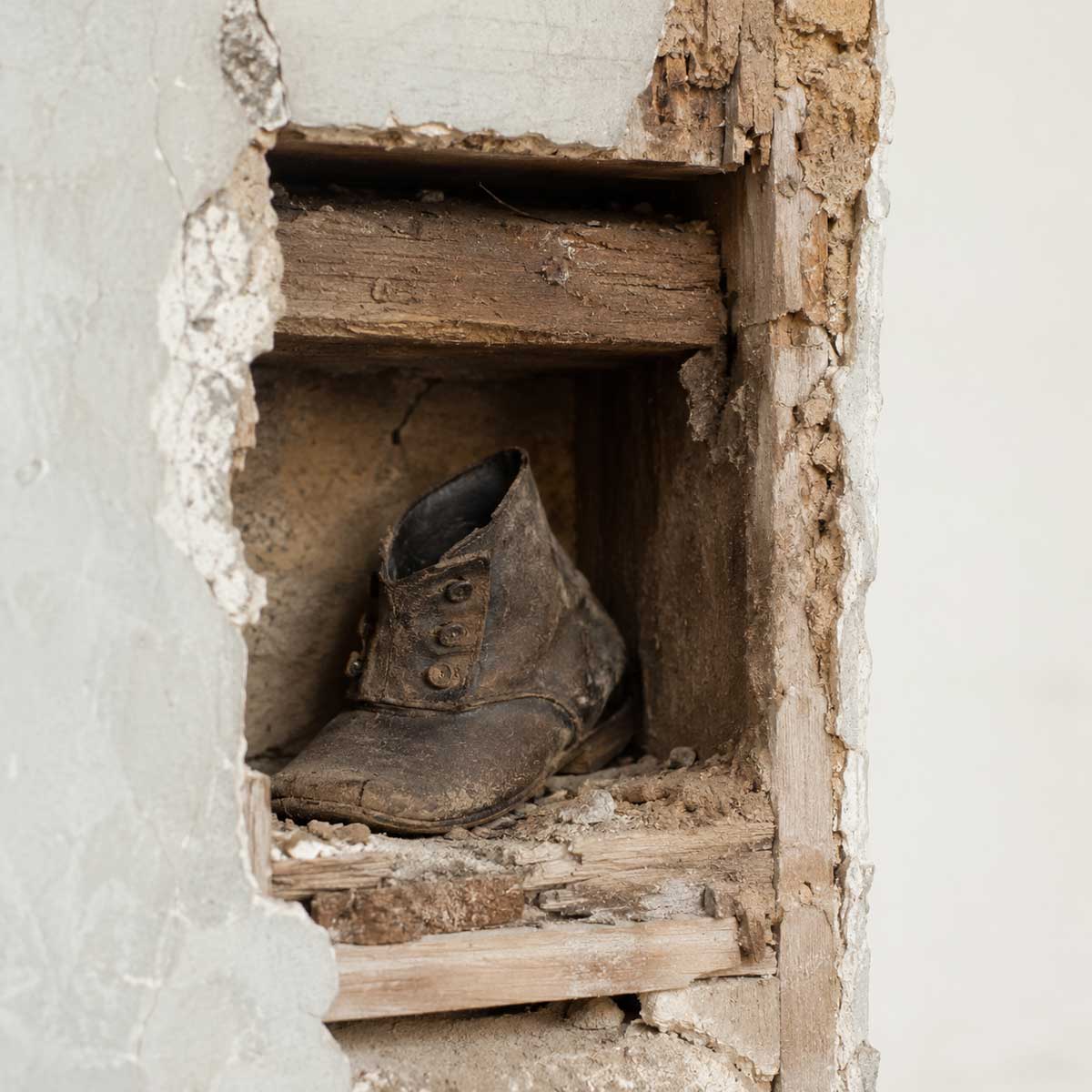
Researchers call these objects concealed shoes. They do not sit forgotten at the back of a cupboard. Instead, they appear inside the structure of a building, often in places that somebody could only have reached during construction or repair.
Imagine lifting a floorboard or opening a blocked chimney and finding a worn leather shoe surrounded by plaster and dust. Someone selected it, carried it to that spot and left it where nobody was expected to see it again.
That discovery raises several questions. Who placed it there? Why choose a shoe? Was it rubbish, a private ritual, a protective charm or simply an old custom that no longer needed an explanation?
It also raises one more immediate question.
Should you put it back?
A Pattern Hidden Inside Buildings
A single shoe inside a wall might be an accident. Hundreds of similar discoveries in comparable parts of old buildings begin to look like a pattern.
Historic England records that people regularly concealed shoes in European buildings from at least the sixteenth century. Finds have appeared in chimneys, beneath floors, above ceilings and around doors, windows and other openings.
An even earlier English example came from Winchester Cathedral. A pair of shoes was discovered behind choir stalls installed in 1308. That find does not prove that every hidden shoe belonged to one unbroken tradition, but it shows that the practice has deep historical roots.
The repeated choice of object also matters. Builders had countless scraps they could have sealed inside a wall. Yet worn shoes appear often enough, and in similar locations, to suggest that many owners placed them deliberately.
The Vulnerable Parts of a House
The position of a concealed shoe may offer the strongest clue to its purpose. Many finds come from fireplaces, chimneys, doors, windows, roofs and other points where the inside of a building meets the outside world.
Earlier belief systems did not always treat these places as ordinary architectural features. A threshold could also represent a vulnerable entrance through which illness, misfortune, harmful forces or unwelcome supernatural visitors might pass.
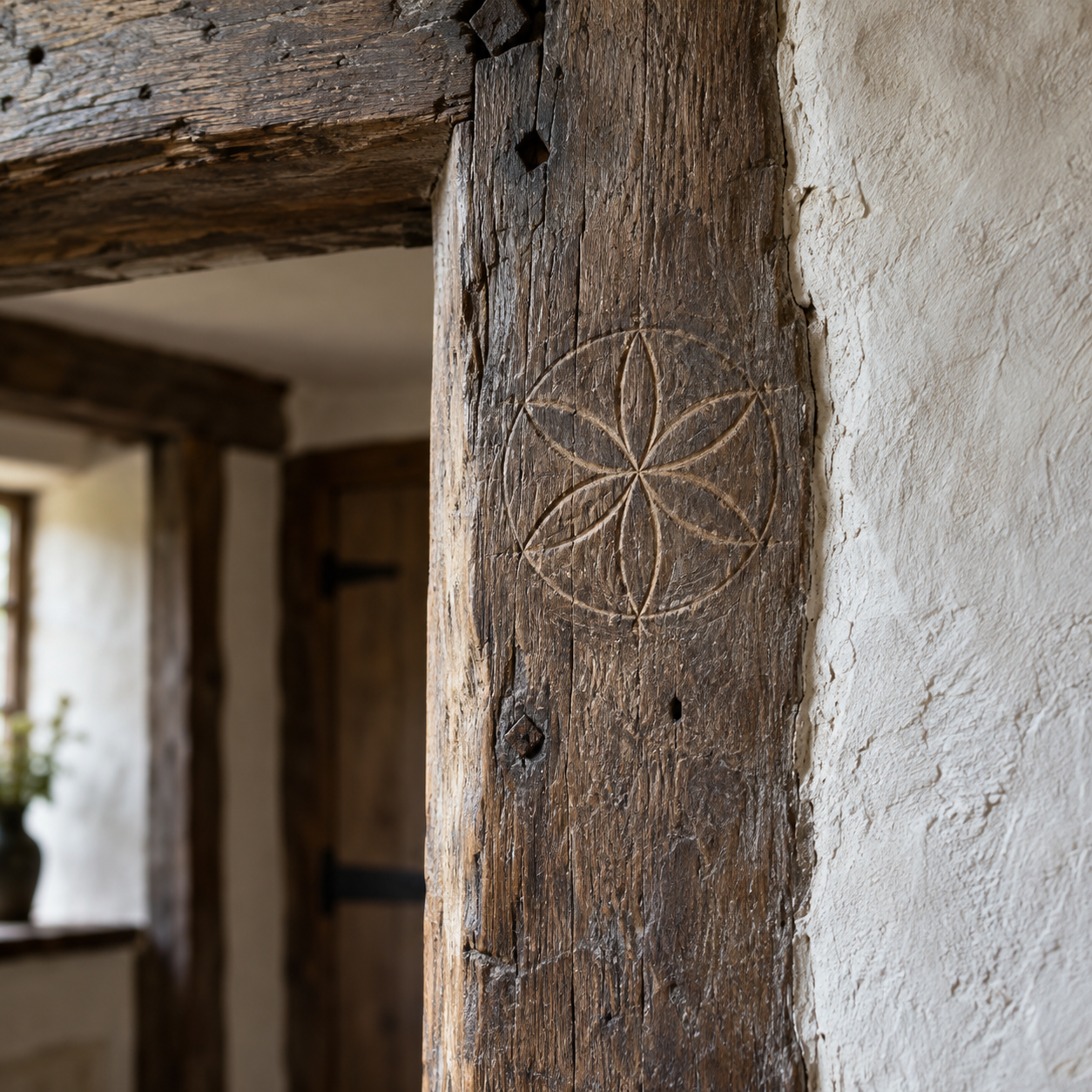
Historic buildings sometimes contain other forms of ritual protection in the same areas. People cut protective marks into timber, stone and plaster. They also concealed bottles, garments, animal remains, bones and other objects within the structure of houses.
The Museum of Cambridge describes practices in which householders hid objects near entry points to distract or trap a witch before it reached the people inside. Witch bottles could contain pins, thread, hair or similar materials, while shoes and bones formed part of the wider range of concealed safeguards.
None of this proves that every shoe found during building work was intended to stop a witch entering through the chimney. It does show, however, that hiding an object inside a house could serve a recognised protective purpose.
Protection, Luck or Something Else?
The people who concealed these shoes rarely left written explanations. No label remains attached to the heel saying, “Placed here for protection on Tuesday afternoon.” Researchers must work from the object, its location, the age of the building and comparisons with similar discoveries.
Protection against witchcraft or harmful supernatural forces remains one interpretation. Other explanations connect hidden shoes with household luck, fertility, prosperity and customs surrounding the construction or alteration of a building.
Some shoes may have acted as offerings. Others may have continued a tradition whose original meaning had already become uncertain. Customs can pass between families, trades and generations even after people stop agreeing about what they mean.
One householder may have believed strongly in the shoe’s protective power. Another may have copied a parent or neighbour. A third may simply have thought that an old house ought to contain an old shoe.
Some concealed shoes may, of course, genuinely have been rubbish. Historical mystery does not require every damaged boot to possess supernatural importance. The strongest evidence lies in the combination of deliberate concealment, repeated locations and the wider practice of hiding protective objects within buildings.
A Mystery with Its Own Database
Northampton Museum and Art Gallery maintains an international database of concealed shoes found in buildings. The museum also holds more than 18,000 examples of footwear, alongside shoemaking tools, archives, photographs and other material connected with shoe history.
The concealed shoe index records a different kind of evidence. It gathers information about where a shoe was found, what kind of building contained it and what researchers can still learn from the circumstances of its discovery.
Human civilisation has created indexes of monarchs, wars, diseases, inventions and important works of art. It has also created an international database of old shoes discovered inside walls.
That is not as ridiculous as it sounds. Each recorded shoe adds another piece to a much larger pattern. Its age, condition and exact position can help researchers compare finds across different buildings, places and periods.
An object that seems meaningless on its own becomes more informative when placed beside hundreds of similar examples. A shoe on a foot is clothing. A shoe in a cupboard is storage. A shoe sealed inside a chimney becomes evidence.
What to Do If You Find a Concealed Shoe
Northampton Museum asks people to report concealed shoes and welcomes information even when the details are incomplete. A careful record can help preserve evidence that building work might otherwise destroy.
Before removing the shoe, photograph its exact position and the surrounding structure. Record the room, wall, floor, chimney or opening in which it appeared, together with anything known about the age and history of the building.
“Found somewhere near the fireplace” tells researchers far less than a photograph showing precisely where the object sat. Even a partial record may still contribute to the museum’s continuing study of the practice.
Historical evidence cannot settle whether you should return the shoe to its hiding place. Removing it changes the original arrangement. Replacing it preserves that arrangement, although repairs may make this impractical.
What matters most is recognising that the object may not be ordinary building debris. Somebody once selected that shoe, carried it to that part of the building and left it where they expected it to remain unseen.
They may have hoped to protect the house from danger. They may have invited good fortune. Perhaps they followed a custom already too old to explain.
Or perhaps they understood something we have forgotten: no home is entirely complete until there is a mysterious shoe inside one of the walls.
Continue into Uncommonology®
One unusual idea often leads to another. Begin the free Initial Certificate of Uncommonology® and take your first step into the study of uncommon knowledge.
Start the free Initial Certificate →
Already enrolled, or ready to create your account?