Sometimes the strangest thing beneath an old floor is there because somebody desperately wanted it to stay hidden.
Lift the boards of a seventeenth-century house and you might reasonably expect dust, rubble, lost coins or the remains of a mouse with extremely poor judgement.
You might not expect a sealed bottle.
Still less one deliberately placed beneath a hearth or doorway and containing iron nails, bent pins, hair, nail clippings or even human urine.
Yet bottles containing combinations of exactly these things have been discovered in old buildings across parts of England.
They are now usually called witch bottles. And they reveal a world in which illness, misfortune, medicine and magic could become very difficult things to separate.
A Cure for Being Bewitched
To understand the bottle, it helps to forget the modern idea of witchcraft as something belonging neatly to folklore, Halloween or fantasy.
In seventeenth-century England, many people accepted that another person might be capable of causing genuine harm through supernatural means. An unexplained illness, persistent pain, fits or a run of extraordinary misfortune could therefore acquire an additional possible diagnosis: bewitchment.
That did not necessarily mean marching off to accuse somebody of being a witch. Another option was to seek help from a healer or practitioner sometimes described as a cunning person.
Among the remedies available was a curious procedure involving a bottle.
The afflicted person’s urine might be placed inside it. Pins, needles or nails could be added. Hair, fingernail clippings, thorns and other materials appear in surviving examples and historical accounts.
The vessel was then sealed and treated in some way. Some bottles were heated. Others were buried or concealed.
This was not simply a lucky charm tucked away in case something unpleasant happened one day. The bottle could form part of a specific response to a problem that people believed was already happening.
Why Put Those Things Inside?
The ingredients look bizarre when separated from the beliefs surrounding them.
Within that belief system, however, they had a certain logic.
Urine, hair and nail clippings had come directly from the supposedly afflicted person. They could therefore represent that person physically inside the remedy. Pins and nails introduced sharp, potentially painful objects into the mixture.
The idea belonged to a much wider history of sympathetic and contagious magic: the belief that things which had once been connected could continue to influence one another, or that an action performed on one object could affect something symbolically linked to it.
The bottle created a small, sealed environment in which those relationships could be manipulated.
Historical accounts describe bottles being used in attempts not merely to block harmful magic but to turn it back upon whoever was believed to have caused it.
Seen from the twenty-first century, it sounds extraordinary. Seen from inside a world in which bewitchment could be considered a possible explanation for illness, it was an attempted treatment.
Why Bury It Beneath the House?
This is where archaeology becomes particularly interesting.
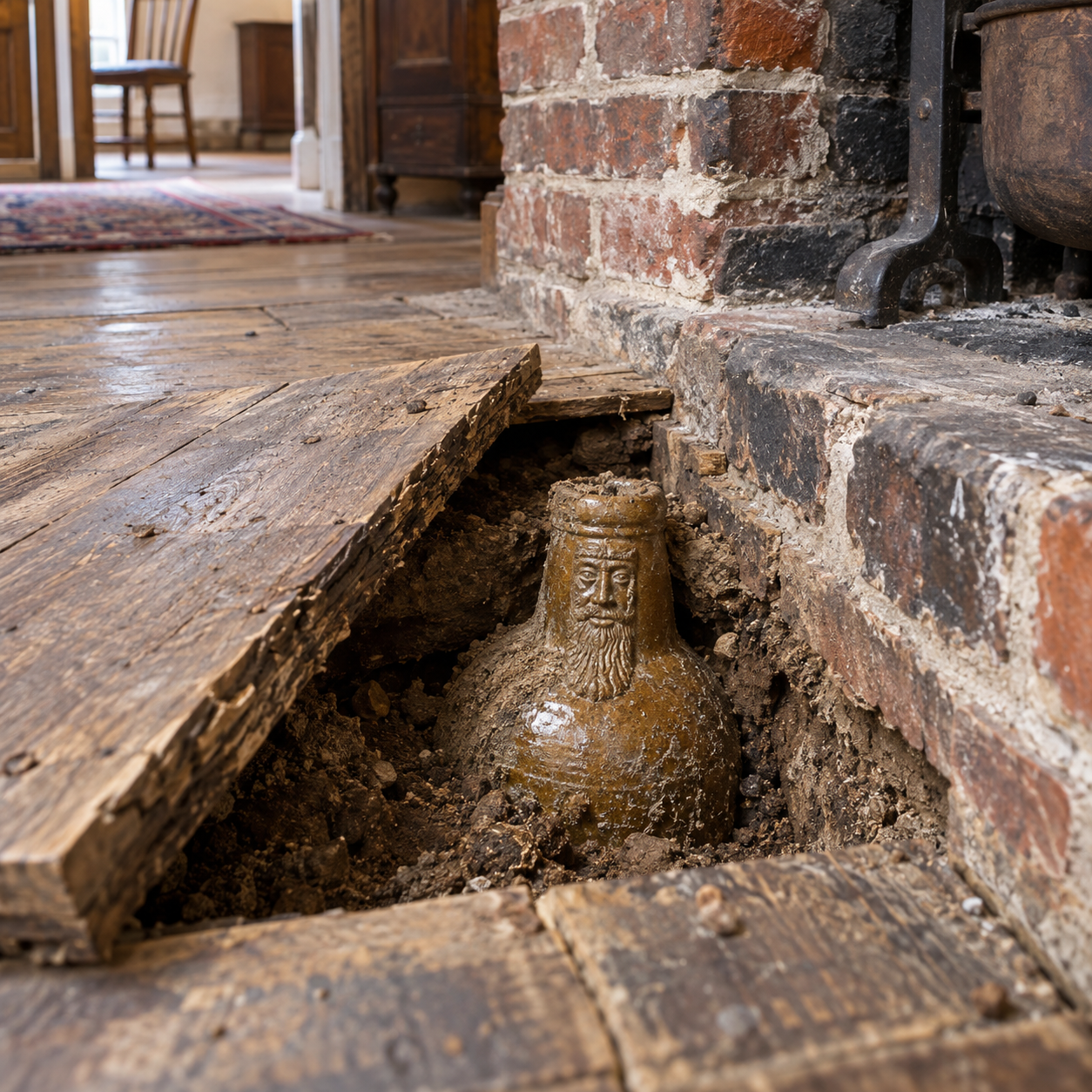
Researchers have found suspected witch bottles in several kinds of places, including ditches, churchyards and near waterways. But a striking number associated with buildings have appeared beneath floors, beneath thresholds and in or around hearths and chimneys.
These were significant parts of a house.
The threshold marked the point where outside became inside. The hearth was physically and socially central to domestic life and provided heat. Floors and foundations offered places where an object could be concealed and left undisturbed.
Exactly why an individual bottle occupied a particular location cannot always be known. Archaeologists are cautious about turning every hidden object into evidence of a single universal ritual.
But the repeated concealment of bottles in particular parts of buildings strongly suggests deliberate placement rather than accidental loss.
Somebody put them there.
More importantly, somebody intended them to remain there.
The Bottles Were Ordinary Before They Became Extraordinary
One of the most distinctive vessels associated with the practice is a type of brown salt-glazed stoneware jug decorated with a bearded face.
These vessels are often called Bellarmine jugs, although archaeologists also use the more accurate German name Bartmann, meaning “bearded man”. Many were manufactured around Frechen, near Cologne, and exported in large numbers.
They were not originally manufactured as magical objects.
They were containers.
That makes their later use particularly revealing. An ordinary household object could be taken out of everyday circulation, filled with unusual materials, sealed and given an entirely different purpose.
Not every buried old bottle is therefore a witch bottle, and researchers are understandably careful about the identification. Archaeological context matters. So do surviving contents, the date of the vessel and the circumstances in which it was discovered.
A bottle containing a few rusty nails is intriguing. A sealed seventeenth-century vessel deliberately concealed beneath a hearth with pins, hair and other unusual material inside it is considerably more persuasive.
“Witch Bottle” Is a Slightly Misleading Name
The modern name creates an irresistible mental picture: perhaps a bottle designed to imprison a witch, or some object made and hidden by witches themselves.
Neither idea properly describes the evidence.
Recent research has increasingly placed these bottles within the overlapping worlds of early modern healing, popular magic and counter-witchcraft.
That distinction matters.
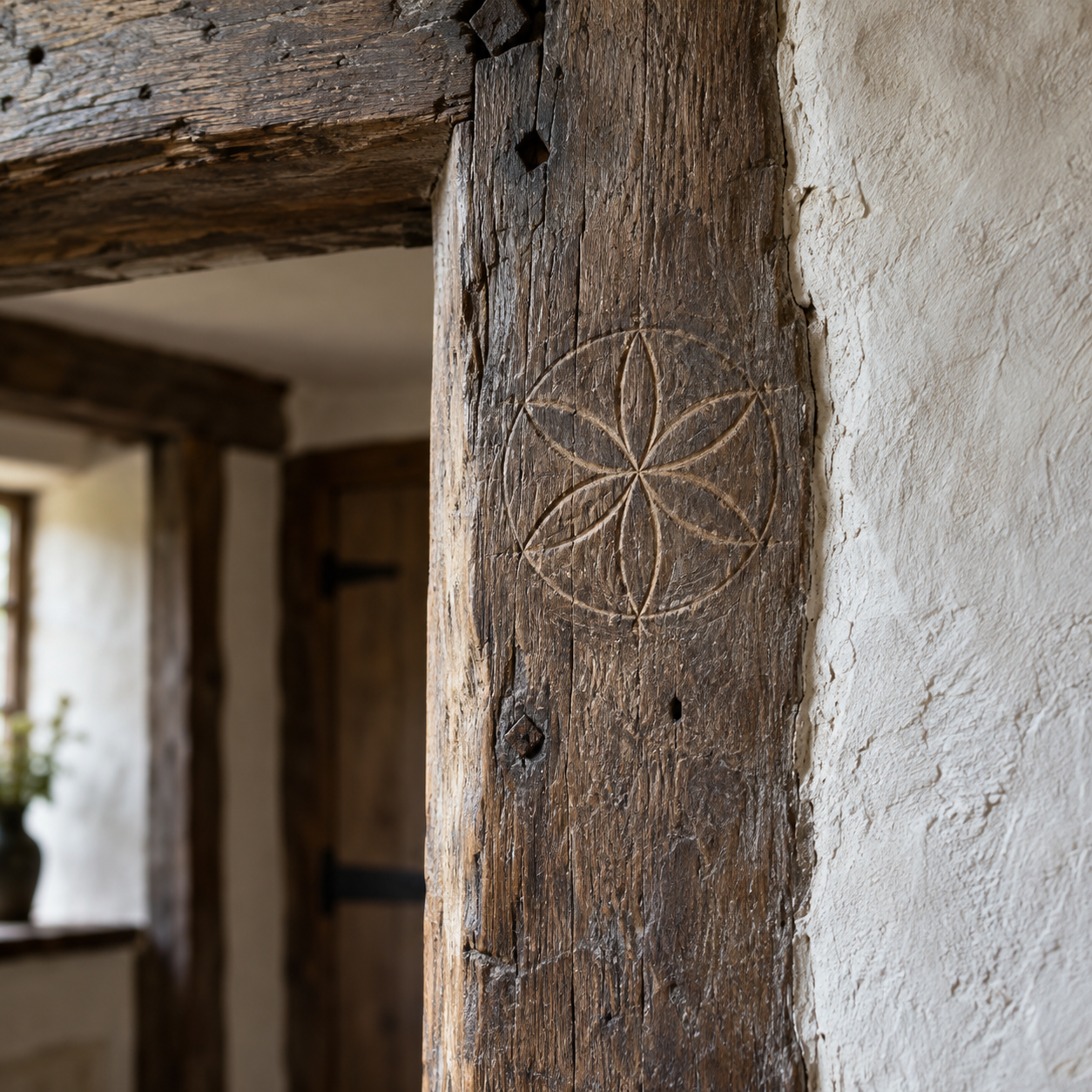
People certainly concealed protective objects inside buildings. Shoes, marks scratched into timber and masonry, horseshoes and other deposits have all been associated with attempts to protect domestic spaces.
But the classic bottle containing bodily material and sharp metal objects appears to have been something more particular: a prepared remedy associated with a person believed to be suffering from supernatural interference.
In other words, it was less like installing a magical burglar alarm and more like filling a prescription.
It just happened to be a prescription involving urine and bent pins.
What Old Houses Remember
Many surviving bottles have been discovered not by people looking for magic but by builders, homeowners and archaeologists opening parts of buildings that had remained closed for generations.
That is part of what makes them so compelling.
Written history tends to preserve governments, wars, institutions and the opinions of people who had the opportunity to write things down. A concealed object preserves something different.
It records an action.
At some point, somebody stood inside a house with a bottle. They filled it. They sealed it. They chose a place beneath a floor, threshold or hearth. Then they covered it over.
Whatever happened afterwards, the bottle remained while the people who understood its purpose disappeared.
Centuries later, we uncover it and find something unexpectedly intimate: not proof that magic worked, but evidence that somebody once believed strongly enough in a particular explanation of illness to place part of themselves inside a bottle and bury it beneath their home.
That may be the most uncommon thing about witch bottles.
They did not preserve magic.
They preserved a way of making sense of the world.
Continue into Uncommonology®
One unusual idea often leads to another. Begin the free Initial Certificate of Uncommonology® and take your first step into the study of uncommon knowledge.
Start the free Initial Certificate →
Already enrolled, or ready to create your account?