Strewing Herbs Turned Floors into Fragrant Gardens
A room could once be perfumed simply by walking across it.
Before air fresheners, scented candles and plug-in diffusers, some English households scattered aromatic plants across their floors. These plants became known as strewing herbs.
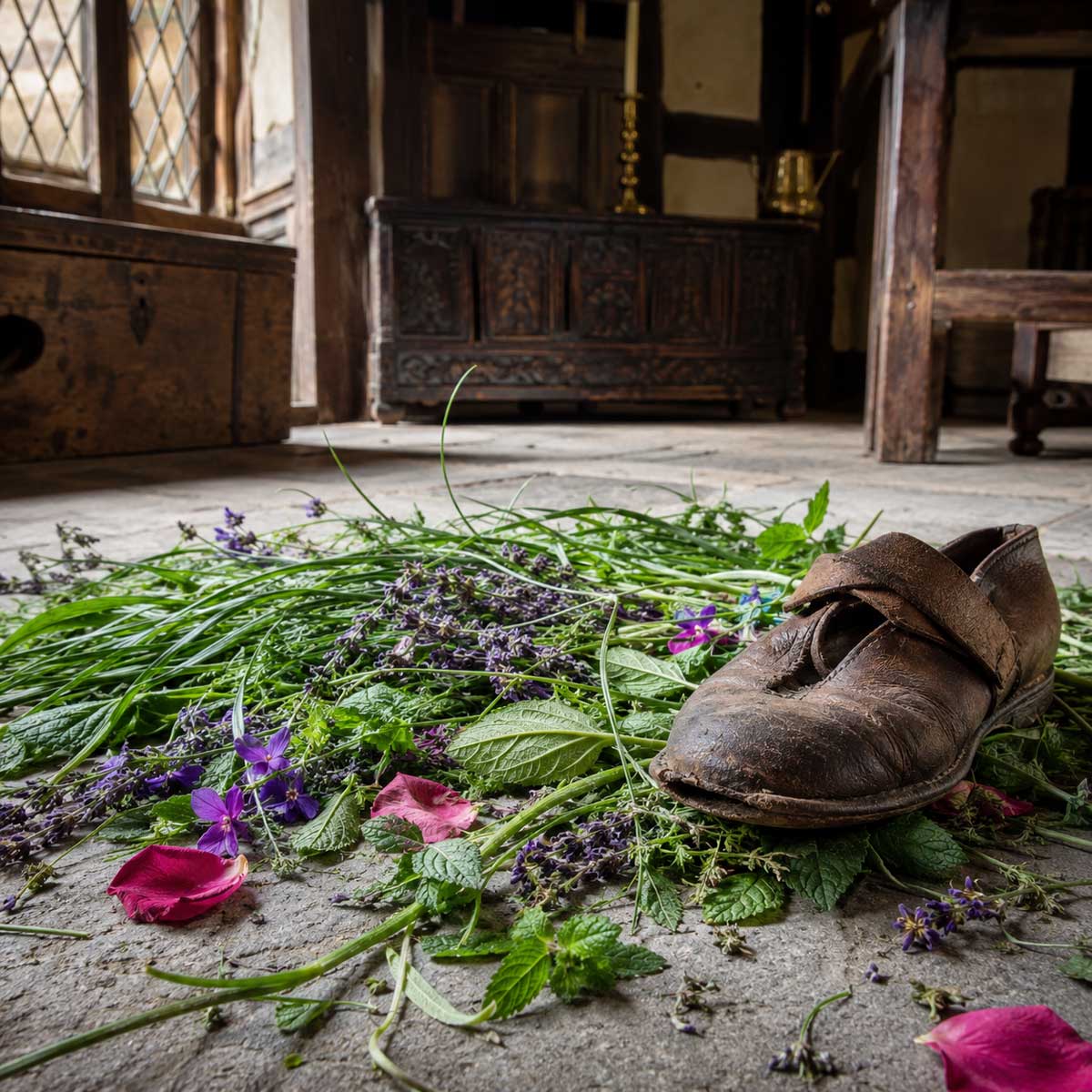
Lavender, mint, sage, violets and roses could all appear beneath people’s feet. As shoes crushed the leaves, the plants released fresh waves of fragrance into the room.
This was not merely a picturesque custom invented by people with too much lavender. Sixteenth-century household manuals treated plants for strewing as a distinct category, separate from herbs grown for cooking, medicine or decoration.
The garden did not end at the door. Householders carried part of it inside and placed it directly across the floor.
What Strewing Herbs Did Inside the Home
Historic floors varied according to place, period and wealth. A prosperous chamber might have boards, stone or tiles. More modest buildings could have compacted earth, while rushes and woven matting provided another form of covering.
Households could scatter aromatic herbs over these surfaces or mix them with rushes. The precise arrangement varied, but the purpose remained broadly similar: to make an interior feel fresher and more pleasant.
The plants introduced colour and fragrance into rooms without mechanical ventilation, sealed surfaces or manufactured cleaning products. They also offered a simple way to renew part of the interior.
Once the material had wilted or become dirty, someone could sweep it away and replace it with fresh cuttings. A household could therefore alter the smell of a room using plants gathered from its garden or surrounding land.
Strewing occupied an unusual position between flooring, cleaning, gardening and perfume. The plants looked decorative, yet people also expected them to perform practical work.
They helped disguise unwanted smells. Strongly scented varieties were associated with efforts to discourage insects. Meanwhile, rushes could soften the feel of a hard surface beneath the feet.
Movement completed the system. Each footstep bruised the plants and released more scent into the air.
The Twenty-One Plants Chosen for Strewing
One of the clearest records of strewing herbs appears in Thomas Tusser’s Five Hundred Points of Good Husbandry, a sixteenth-century guide to farming and household management.
Tusser organised plants according to their purpose. He listed herbs for the kitchen, plants for salads and sauces, flowers for pots, ingredients for distilling and remedies for medicine.
He also gave “strowing herbes” their own section.
His list contained twenty-one entries: basil, balm, chamomile, costmary, cowslips, daisies, sweet fennel, germander, hyssop, lavender, spike lavender, cotton lavender, knotted marjoram, maudlin, pennyroyal, roses, red mint, sage, tansy, violets and winter savoury.
To a modern reader, it resembles the planting plan for a remarkably fragrant cottage garden. To Tusser’s readers, however, it also represented a collection of possible floor coverings.
Some names remain immediately familiar. Others have almost disappeared from ordinary conversation.
Costmary has a strong balsamic fragrance and once held a familiar place in household gardens. Germander also appeared in herb gardens, while maudlin referred to an aromatic plant related to tansy.
The variety reveals that strewing involved more than throwing a little lavender into a room. Householders had access to a broad palette of leaves, stems and flowers. Each plant brought its own colour, texture and scent.
Availability would have shaped the final mixture. Season, location and the size of a household garden all influenced which plants reached the floor.
How Footsteps Released the Fragrance
An untouched sprig of mint smells pleasant. Crush it between your fingers, however, and the scent becomes much stronger.
The same principle made strewing herbs effective. Aromatic plants hold scented oils and other volatile compounds inside their leaves and flowers. Bruising the plant tissue allows more of those compounds to escape.
A herb-covered floor therefore responded to movement.
Shoes, skirts, chair legs and household animals disturbed the plants beneath them. Every busy period created another burst of fragrance.
The effect may have become especially noticeable when guests arrived, servants crossed the chamber or a large household gathered for a meal. Instead of releasing perfume from one bowl or burner, the entire walking surface contributed to the smell of the room.
People also linked several strong-smelling plants with protection from household pests. Tansy, pennyroyal, hyssop and other aromatic herbs appeared in traditional attempts to discourage insects.
That does not mean strewing created a perfectly clean or pest-free house. Historical households lacked modern knowledge of bacteria, insect life cycles and chemical treatments.
Instead, they judged cleanliness partly through freshness, visible renewal and smell. A room that contained newly cut herbs would have seemed better managed than one filled with stale or unpleasant odours.
A well-kept interior was not only something to see. It was something to smell.
Elizabeth I and Her Perfumed Chambers
Strewing herbs appeared in royal chambers as well as ordinary homes.
Historic Royal Palaces records that Elizabeth I liked sweet, aromatic scents. Her chambers contained fragrant herbs and leaves, with meadowsweet and lavender among her particular favourites.
The gardens at Hampton Court supplied plants for culinary, medicinal and cosmetic purposes. Herbs also appeared in scented preparations, waters and other products made for the royal household.
At court, fragrance became part of royal presentation.
A sweet-smelling chamber demonstrated more than an attempt to disguise an unpleasant smell. It revealed access to gardens, specialised knowledge and a steady supply of fresh materials.
Someone had to grow the plants. Others harvested them, carried them indoors, distributed them and removed them after they faded.
As a result, the lavender beneath the Queen’s feet also represented labour, organisation and wealth.
The scent helped create a carefully controlled atmosphere around the monarch. Her private rooms could feel cultivated and ordered, even while hundreds of people crowded into the wider palace.
When Herb Strewing Became a Royal Ceremony
The custom eventually produced one of the strangest-sounding titles in the royal household: the Herb Strewer.
The role involved distributing aromatic plants and flowers in royal surroundings and during ceremonial occasions. Over time, the practice moved away from routine household management and towards public tradition.
Anne Fellowes served as herb-strewer at the coronation of George IV in 1821. She scattered flowers as part of the elaborate ceremony surrounding the new king.
By then, the plants no longer formed the ordinary flooring of a royal chamber. They decorated an established ceremonial route.
The meaning had changed.
What began as a practical way to freshen an interior had become a performance. The scattered flowers connected George IV’s coronation with an older and more romantic version of royal life.
The transformation also reveals how customs survive after their original function has faded. A household practice can become a symbol, then a tradition, and finally a piece of theatre.
Why Strewing Herbs Disappeared from Floors
Loose plant material had obvious disadvantages.
Herbs wilted, scattered and clung to clothing. They required growing, harvesting, carrying and frequent replacement. Once the leaves became dry or dirty, the material intended to freshen the room created more work.
Changes in domestic interiors gradually made strewing herbs less useful. Wooden boards, rugs, woven coverings and later fitted carpets offered more permanent surfaces.
Improved ventilation and changing cleaning practices also altered the management of indoor smells. At the same time, fragrance moved away from the floor.
Households placed herbs in bowls, sachets and linen chests. Distilled waters, soaps and perfumes provided other ways to scent a room or its occupants.
Eventually, manufacturers offered concentrated household fragrances that required no garden, harvest or daily sweeping.
The old custom could not compete with washable surfaces, vacuum cleaners and products designed to release a predictable scent.
However, the desire behind it never disappeared.
People still place lavender in bedrooms, add mint and citrus to cleaning products and use diffusers to make rooms smell of flowers, forests or rain.
The technology changed. The wish to make a home smell cleaner, fresher and more beautiful did not.
The Room That Changed as People Walked
A floor covered with cut plants would probably irritate a modern cleaner within minutes.
It was temporary, untidy and dependent on a steady supply of fresh material. Nevertheless, it possessed something that most modern air fresheners lack.
It responded to the people inside the room.
A quiet chamber might hold only a faint herbal smell. As the household became busier, footsteps crushed the leaves and renewed the fragrance.
The room announced human movement through scent.
Strewing herbs remind us that historic interiors were designed for more than the eye. Their occupants experienced rooms through temperature, smoke, texture, sound and smell.
People managed those sensations using the materials available to them. Sometimes that meant laying part of the garden across the floor.
Then, with every passing footstep, the house seemed to bloom again.
Continue into Uncommonology®
One unusual idea often leads to another. Begin the free Initial Certificate of Uncommonology® and take your first step into the study of uncommon knowledge.
Start the free Initial Certificate →
Already enrolled, or ready to create your account?